
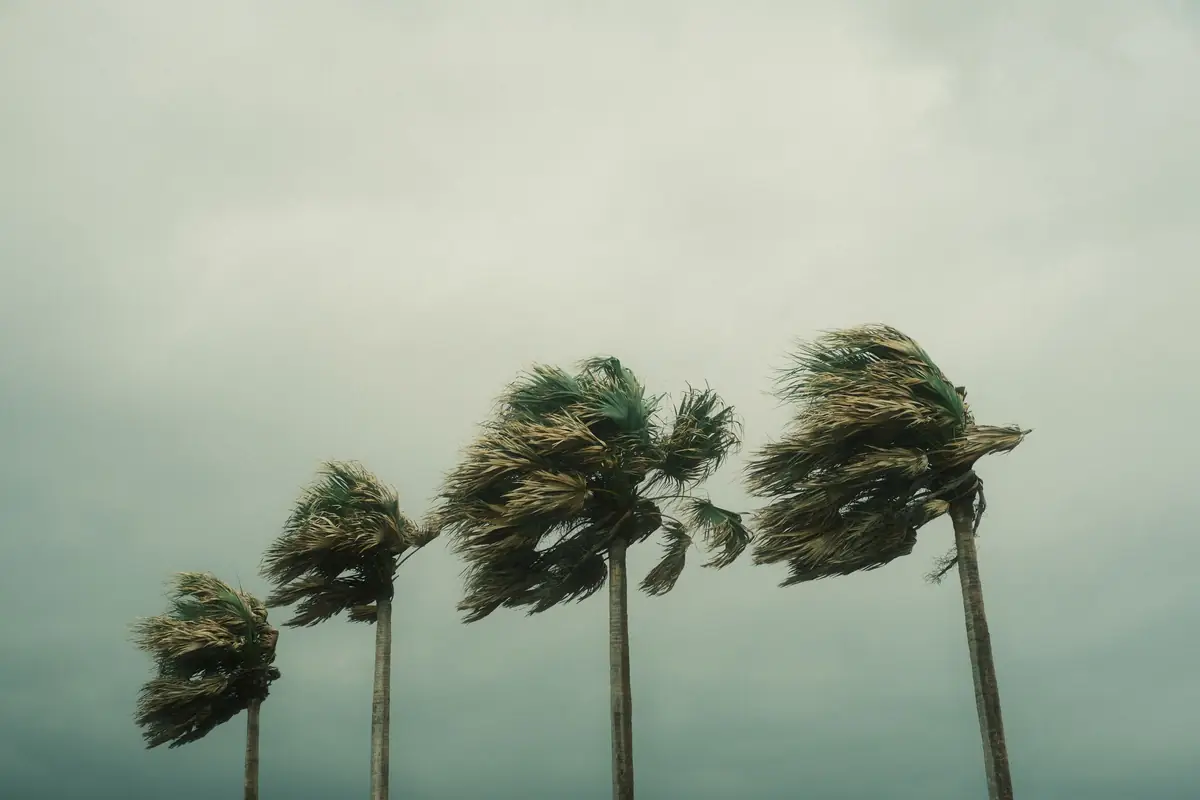
Start hurricane prep for your landscape months before the season opens. The Atlantic hurricane season runs from June 1 to November 30. Do the structural pruning on trees early, take only dead fronds off palms, secure loose items, and photograph the yard. UF/IFAS says correct pruning makes trees more resistant to hurricane damage.
Xtreme Scapes offers tree and shrub care in Brevard County: trimming and pruning of trees, shrubs, hedges and palms, deadwood removal, and a spring storm-prep pass. This checklist shows what a good prep job covers, so you can judge any quote, ours included.
Know the dates and your zone
The National Hurricane Center says the peak of the Atlantic hurricane season is September 10, with most activity between mid-August and mid-October. It also says tropical cyclone activity sometimes occurs before and after the June 1 to November 30 window. Some arrive late: the FSU Florida Climate Center says Hurricane Nicole made landfall near Vero Beach on 10 November 2022 and was only the third November hurricane on record to make landfall in Florida. Its report puts rainfall over 5 inches in parts of central Florida "from Sumter east through northern Brevard County."
Your exposure depends on where the lot sits. The City of Indian Harbour Beach says Brevard County's mandatory evacuation areas include the barrier islands, mobile and manufactured homes, and low-lying areas, and that homes near US 1 may be in a storm surge zone. The Florida Division of Emergency Management says the greatest threat to life from a hurricane is storm surge flooding and gives a Know Your Zone map to look up an address.
That affects when you can do yard work. The same city page says the causeways do not close before a storm's arrival, but it is unsafe to cross them in high winds. Finish the yard work before a watch, not after. The salt and wind side of barrier-island planting is covered in the salt tolerant plants guide.
Checklist by month
This is a suggested schedule, not an IFAS calendar. The basis for each step is linked.
| When | Do this | Basis |
|---|---|---|
| December to February | Walk the yard. Note dead, broken or hanging limbs and any tree that worries you. Book an arborist evaluation. | UF/IFAS says to contact a certified arborist "far in advance of hurricane season" |
| March and April | Prune trees, shrubs and palms, so the debris is gone well before June. | UF/IFAS Brevard: trim "well before weather events" |
| May | Photograph the property. | The state CFO says to photograph and video the inside and outside of the home |
| When a cone appears | Bring in furniture, bird feeders and potted plants. Secure the rest. | UF/IFAS Florida-Friendly Landscaping staff on furniture and feeders; the Brevard Extension office on plants and other objects |
Should you trim trees before a hurricane?
Yes, but well ahead of any storm, and done correctly. The UF/IFAS Extension office in Brevard County says to trim trees and remove weak branches well before weather events, and not to trim when there is no debris pickup coming before the storm, because the uncollected pile will only add to the storm hazards.
UF/IFAS also says to look for dying, dead or broken branches, and to watch trunks for strange bulges, breaks, wounds or bark shedding. Mushrooms at the base can indicate a fungal infection, so ask the arborist about those.
On what to cut, the steps are: remove all dead, diseased or injured branches, and remove or shorten stems that compete with the main leader. The same page says to hire an arborist certified by the International Society of Arboriculture to prune trees taller than about 15 feet.
Do not accept topping. UF/IFAS advises you to avoid arborists who advertise they "top" trees.
For shrubs, UF/IFAS says to use pruners, not hedge shears, to cut shrubs back. Cutting back one-third of the plant improves its appearance and health, per the Hillsborough County Florida-Friendly Landscaping agent quoted there.
Young trees need more attention. UF/IFAS says young trees need structural pruning more frequently until they are mature, when they may need little to no pruning.
Palms: fronds, seed pods, and why not the hurricane cut
Palms do not need a special storm trim. A UF/IFAS Extension office in Pasco County says palms are naturally prepared for strong winds, and hurricane pruning is a myth. Its advice: remove completely dead fronds, damaged leaves and seeds or fruit, and do not remove yellow or green fronds.
The hurricane cut removes most of the leaves, with the intention of increasing wind resistance. UF/IFAS says that method is not rooted in science and makes trees less able to withstand hurricane-force winds. It adds that after hurricane seasons, hurricane-cut palms were more likely to have their crowns snapped off by the wind.
The Pasco office also warns that over-pruning leads to pencil-pointing, where the heart of the palm weakens and thins, and the bud will easily break from the trunk.
What is worth doing, per UF/IFAS:
- Take off dead fronds and heavy fruit clusters, which can fall and injure people or property. The Brevard office says palm fronds can become dangerous and even deadly during a storm.
- Keep every frond above the horizontal. UF/IFAS puts the absolute limit at 9 o'clock and 3 o'clock, and the rule of thumb is to remove only fully brown fronds.
- Never use climbing spikes, and never forcibly pull a frond off that does not come off easily.
- Do not tie or strap a palm down. The Pasco office says that can make it more vulnerable to breakage.
Our palm trimming removes dead and hanging fronds and seed pods and leaves the green canopy, which matches that guidance.
Loose items, gutters and irrigation
The Brevard Extension office says strong storm winds turn everyday items like palms, loose branches, patio furniture, potted plants and outdoor grills into damaging projectiles. It says to bring outdoor furniture, decor and plants inside, and to secure what cannot be moved indoors.
UF/IFAS Florida-Friendly Landscaping staff add that you can clear gutters of debris, turn off irrigation systems, and secure rain barrels.
Screen enclosures and lanais
Have the enclosure looked at before the season by a company that builds them. Xtreme Scapes builds new pool cages, porch and lanai enclosures and also re-screens and repairs existing ones, including storm damage. See screen enclosures and pool cages.
Photograph the property
Florida's Chief Financial Officer tells owners to conduct a home inventory with photos and video of the inside and outside of the home before a storm.
After the storm: what you can do and what to hand off
Start with safety. The utility FPL says to assume all cables and wires are energized and stay away, and to keep away from flooded and debris-laden areas because they may hide downed lines. If you see a downed line, FPL says to call 911 or FPL at 1-800-4OUTAGE. FPL also says to never attempt to trim vegetation near power lines; only specially trained line-clearing professionals should work around them.
On a barrier island, stay off the roads at first. The City of Indian Harbour Beach says that after a storm the causeways close until the Florida Department of Transportation has inspected them, so you may not be able to reach the yard right away.
You can safely look, photograph and write notes. The CFO's office says to take pictures, videos or written notes of the damage and report it to your insurance company.
Leave anything near a power line to the line-clearing professionals FPL describes. For any tree taller than about 15 feet, and any trunk showing the bulges, breaks or wounds that UF/IFAS says to watch for, ask for an arborist certified by the International Society of Arboriculture, and ask any company you call, us included, whether one will be on the job.
Be careful who you hire in the weeks after a storm. The same CFO page says to beware of anyone offering to help after a storm who wants cash only, and to ask for proof of liability and workers' compensation coverage.
Questions to ask before you book tree work
Get the answers in writing before anyone cuts. UF/IFAS lists these tips for hiring tree help:
- Ask for proof of workers' compensation insurance and check for any permits and licenses required by your local and state government.
- Have more than one arborist look at the job and get a written proposal.
- Ask for references and check them, which the same page recommends.
Also ask what the company does not do. Our tree and shrub care does not treat sick trees; for that, call a certified arborist or a licensed pest control operator.
To schedule a spring pruning pass, start with tree and shrub care.
See what our Tree & Palm Trimming service includes in Brevard County.
Sources
- NOAA National Hurricane Center: Tropical Cyclone Climatology
- UF/IFAS Gardening Solutions: Pruning and Maintaining Trees
- UF/IFAS Gardening Solutions: Pruning Palms
- UF/IFAS Extension Pasco County: Preparing Palms for Hurricane Season in Central Florida
- UF/IFAS News: Prepare your landscape and trees for the hurricane season
- Florida Department of Financial Services: CFO Ingoglia Shares Hurricane Preparedness Tips for the 2026 Hurricane Season
- Florida Power & Light: Trees and Power Line Safety
- UF/IFAS Extension Brevard County: Prevention Pays! The True Cost of Flying Storm Debris
- City of Indian Harbour Beach: Disaster Preparedness and Response
- Florida Division of Emergency Management: Know Your Zone, Know Your Home
- Florida State University Florida Climate Center: Hurricane Nicole 2022 Report